


Reporting Group
None
Discovering Data Source
Lasair
Discovery Date
2026-02-19 01:35:43.000
TNS AT
Y
Public
Y
Host Name
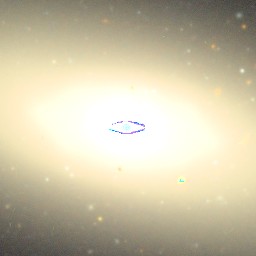
NGC 1527
Host Redshift
0.004
Discovery Mag
53802.6
Filter
g-LSST
Reporter/s
Shevansh Nagar
Spectra
No Data
Light Curves
AT Reports
| ID | Time received (UT) | Sender | Reporter/s | Reporting group | Disc. Data Source | RA | DEC | Discovery date (UT) | Discovery Mag. | Filter | Related files | AT Type | Host name | Internal name | Assoc. Groups | End prop. period | Remarks | ADS Bibcode | Unreal | Auto classification |
|---|---|---|---|---|---|---|---|---|---|---|---|---|---|---|---|---|---|---|---|---|
| 297099 | 2026-03-24 01:13:05 | Shevansh Nagar | Shevansh Nagar | Lasair | 04:08:24.030 | -47:53:49.23 | 2026-02-19 01:35:43.000 | 53802.6 | g-LSST | NUC | NGC 1527 | Lasair 170028489716531248 | Lasair | Transient discovered 1.0 arcsec from the core of NGC 1527 via an independent LSST alert-filtering pipeline. Difference imaging shows a distinct, point-like positive residual distinct from the host nucleus. The g-band lightcurve exhibits a peak flux of ~67,500 nJy (MJD 61091.08) followed by a clear, monotonic decline to ~11,600 nJy over 7 days (MJD 61098.05). Peak detection is highly robust (SNR ~45). Given the fast temporal evolution and tight nuclear offset, spectroscopic classification is encouraged to determine the physical nature of the event. Note: The reported discovery flux of 53,802.6 nJy equates to 19.57 +/- 0.04 ABMag. | 2026TNSTR1264....1N | N |
Classification Reports
No Data
Comments