


Reporting Group
None
Discovering Data Source
None
Discovery Date
2022-05-30 08:11:13.000
TNS AT
Y
Public
Y
Host Redshift
1.76
Discovery Mag
25.8
Filter
Other-
Reporter/s
Patrick Kelly (UMN), Wenlei Chen (UMN), Masamune Oguri (Chiba), Adi Zitrin (Ben Gurion), Jose M. Diego (Cantabria), Alex Filippenko (UCB), Tommaso Treu (UCLA), Saurabh Jha (Rutgers), Ryan J. Foley (UCSC), Thomas Broadhurst (Basque Country), Anton Koekemoer (STScI)
Light curves
▌HST_WFC3_Other
Pointer position (MJD, Mag, Abs.Mag): (0.00, 0.00, 0.00)
Spectra
No Data
Light Curves
AT Reports
| ID | Time received (UT) | Sender | Reporter/s | Reporting group | Disc. Data Source | RA | DEC | Discovery date (UT) | Discovery Mag. | Filter | Related files | AT Type | Host name | Internal name | Assoc. Groups | End prop. period | Remarks | ADS Bibcode | Unreal | Auto classification |
|---|---|---|---|---|---|---|---|---|---|---|---|---|---|---|---|---|---|---|---|---|
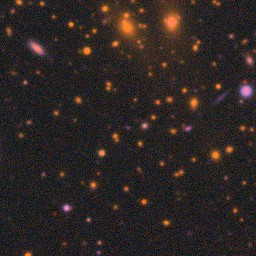
| 151041 | 2022-06-25 14:16:39 | Patrick Kelly | Patrick Kelly (UMN), Wenlei Chen (UMN), Masamune Oguri (Chiba) et al. | 13:47:31.818 | -11:45:51.92 | 2022-05-30 08:11:13.000 | 25.8 | Other- | PSN | We report the detection of a supernova candidate in a galaxy at redshift z=1.76 that is multiply imaged by foreground RX J1347-1145 (z=0.451) galaxy cluster. We found the transient, which should have a magnification of ~4, in imaging taken by the Hubble Space Telescope SNAP GO-16279 program, which is searching for microlensing events of high-redshift magnified stars. In a visit to the field on May 30th, we detect a source with F110W = 25.8+-0.3 mag, with no detection in F606W. No transient is detected in imaging from a previous visit to the field by the program on May 18th. The SN may reappear in ~9.5 years in a pair of highly magnified images of its host galaxy, if it is located in the multiply imaged region of the galaxy. An HST Director’s Discretionary program has been approved to measure its light curve, and acquire WFC IF G102 grism spectroscopy. If a Type Ia SN with minimal extinction, it should reach a peak magnitude of F110W~23.8 magnitudes in early July. | 2022TNSTR1767....1K | N |
Classification Reports
No Data
Comments